FordParts
My Garage
My Account
Cart
OEM Ford Thunderbird Convertible Top Motor
Convertible Motor- Select Vehicle by Model
- Select Vehicle by VIN
Select Vehicle by Model
orMake
Model
Year
Select Vehicle by VIN
For the most accurate results, select vehicle by your VIN (Vehicle Identification Number).
1 Convertible Top Motor found
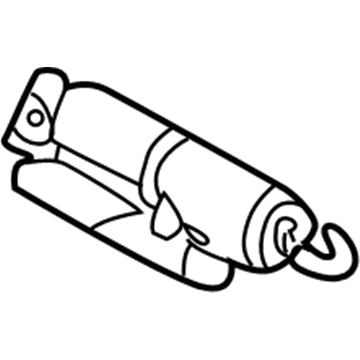
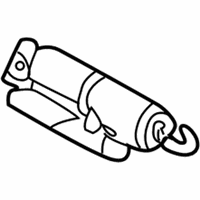
Ford Thunderbird Motor & Pump Part Number: 1W6Z-76533A00-AA
$380.23 MSRP: $609.09You Save: $228.86 (38%)Ships in 1-3 Business Days
Ford Thunderbird Convertible Top Motor
OEM Convertible Top Motor boasts unmatched quality. Each part goes through full quality checks. They adhere to Ford's official factory standards. These steps remove flaws and inconsistencies. So you can get Convertible Top Motor with long life and a perfect fit. Come to our website and find genuine Ford Thunderbird parts. We keep a wide inventory of OEM Thunderbird parts at the highly affordable prices. It's easy to search, compare, and pick what you need. You'll love the clear info and simple checkout. We offer top-rated customer service, and we reply fast. We also ship promptly to ensure your order arrives on time.
Ford Thunderbird Convertible Top Motor Parts and Q&A
- Q:How to service and repair the convertible top motor on Ford Thunderbird?A:Servicing the convertible-top motor typically begins with the hydraulic components being removed as an assembly, and surfaces are often protected to prevent scratches; with the top closed and unlatched the well-sling interior trim cover is detached and the rear-window defrost-grid electrical connector is disconnected at the body rather than from the glass, the ground bolt is removed and the ground wire routed through the trim cover, which is set aside. While the top is generally left in the up position, the lift-cylinder bracket nuts and the lift-cylinder bolts are unfastened, the motor noise-reduction shroud is removed and the motor electrical connector is disconnected, hydraulic line retainers are released and the hydraulic lines are marked for correct reinstallation; the motor assembly is then lifted to release rubber retainers and the motor and lift cylinders can be withdrawn as a unit. For reassembly, the fill plug at the end of the motor assembly is removed and the pump is filled with transmission fluid to the bottom of the fill hole before the plug is replaced; a 12-volt source is typically applied to the motor connector to extend the lift cylinders, then reversed to retract them, cycling this sequence several times, after which fluid level is checked and topped off and the fill plug reinstalled. The motor assembly is positioned and the hydraulic line retainers engaged, the motor electrical connector is reattached, the shroud and lift-cylinder brackets are refitted and the bracket nuts are torqued to about 22 Nm (16 lb-in), with the lift-cylinder bolts installed while the top is up and torqued to about 20 Nm (15 lb-in); finally the defrost-grid ground wire is routed through the well-sling cover and the ground bolt torqued to about 12 Nm (9 lb-ft), the defrost connector and locator are reconnected to the body, and the well-sling interior trim cover is replaced.
Related Ford Thunderbird Parts
 Ford Thunderbird Car Mirror
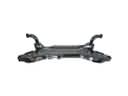 Ford Thunderbird Front Cross-Member
 Ford Thunderbird Front Door Striker
 Ford Thunderbird Hood Latch
 Ford Thunderbird Lift Support
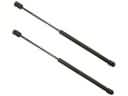 Ford Thunderbird Liftgate Lift Support
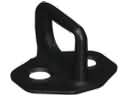 Ford Thunderbird Rear Door Striker
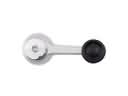 Ford Thunderbird Window Crank Handle
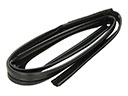 Ford Thunderbird Window Run
 Ford Thunderbird Windshield
 Ford Thunderbird Windshield Wiper
 Ford Thunderbird Wiper Motor