FordParts
My Garage
My Account
Cart
OEM Ford F-350 Super Duty Pressure Plate
Clutch Pressure Plate- Select Vehicle by Model
- Select Vehicle by VIN
Select Vehicle by Model
orMake
Model
Year
Select Vehicle by VIN
For the most accurate results, select vehicle by your VIN (Vehicle Identification Number).
5 Pressure Plates found
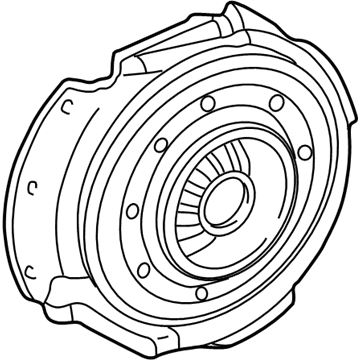
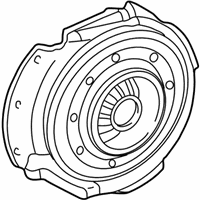
Ford F-350 Super Duty Pressure Plate Part Number: 8C3Z-7563-A
$218.49 MSRP: $320.83You Save: $102.34 (32%)Ships in 1-3 Business Days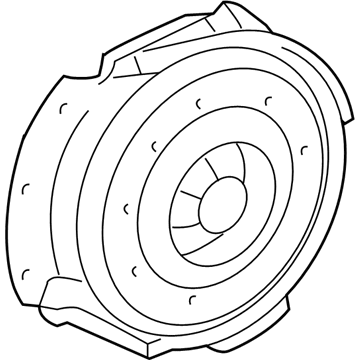
Ford F-350 Super Duty Pressure Plate Part Number: 7C3Z-7563-A
Ford F-350 Super Duty Pressure Plate Part Number: 5C3Z-7563-B
Ford F-350 Super Duty Pressure Plate Part Number: 5C3Z-7563-AA
Ford F-350 Super Duty Pressure Plate Part Number: 1C3Z-7563-BA
Ford F-350 Super Duty Pressure Plate
OEM Pressure Plate boasts unmatched quality. Each part goes through full quality checks. They adhere to Ford's official factory standards. These steps remove flaws and inconsistencies. So you can get Pressure Plate with long life and a perfect fit. Come to our website and find genuine Ford F-350 Super Duty parts. We keep a wide inventory of OEM F-350 Super Duty parts at the highly affordable prices. It's easy to search, compare, and pick what you need. You'll love the clear info and simple checkout. We offer top-rated customer service, and we reply fast. We also ship promptly to ensure your order arrives on time.
The Ford F-350 Super Duty Pressure Plate forms an integral part of clutch assembly operation through various F-350 Super Duty versions because of its dependable performance. The Pressure Plate connects then disconnects the clutch disc to the flywheel to guarantee smooth power transmission from the engine to the transmission. The Ford F-350 Super Duty Pressure Plate offers three main versions which include diaphragm and Borg & Beck and Long Style to match the needs of different drivers. The diaphragm Pressure Plate uses cone-shaped Belleville springs to decrease pedal force needs for daily car use but the Borg & Beck and Long Style Pressure Plates deliver power for heavy-duty driving conditions. The Ford F-350 Super Duty Pressure Plate provides significant advantages over performance that lead to efficiency improvements and better safety functions for an enhanced driving experience. The Ford F-350 Super Duty models support this component for dependable performance across all versions. Special features of improved corrosion resistance and advanced engineering engineering provide the Ford F-350 Super Duty Pressure Plate its competitive advantage in the automotive marketplace. Through its power handling capacity of the current engine options the Pressure Plate demonstrates Ford's dedication to quality combined with innovation thus becoming a trusted option for owners of model trucks.
Ford F-350 Super Duty Pressure Plate Parts and Q&A
- Q:How to service and repair the clutch disc and pressure plate for 5.4L, 6.0L, and 6.8L engines on Ford F-350 Super Duty?A:Your starting point for servicing or repairing the Clutch Disc with pressure plate for 5.4L 6.0L and 6.8L engines will be taking out the transmission housing. Record the origin points of clutch pressure plate and Flywheel before their possible reinstallation. The service requires you to remove clutch pressure plate bolts followed by removing the clutch pressure plate and clutch disc. Examine the contact area of the transmission input shaft Pilot Bearing by checking for both Crankshaft (for gasoline engines) or flywheel (for diesel engines) misalignment and looseness in addition to scoring, discoloration, wear and broken needle rollers. Look for space or oil leaks in the transmission input shaft pilot bearing seal before deciding to replace it with an entirely new unit. Krytox® High-Temperature Grease should be used for lubricating the transmission input shaft pilot bearing since transmission removal likely resulted in drained lubricant. The original clutch pressure plate installation requires resetting the wear indicator by using an appropriate press with adapter to let the adjusting ring move easily. Counterclockwise adjustment of the ring follows to compress the tension springs and maintain the position after releasing finger pressure. Install the clutch disc onto the flywheel after which you should position a clutch alignment tool within the pilot bearing to align the clutch disc if you use this setup on engines with 1-1/4 inch input shafts such as 5.4L and 6.8L models yet 6.0L engines need 1-3/8 inch input shafts incorporating a 0.98 inch pilot bearing inner diameter. Position the clutch pressure plate onto its dowels while considering that diesel flywheels contain two dowels but gasoline flywheels contain three dowels. Align the index marks during this process. A suitable clutch alignment tool enables you to properly align the clutch disc with the pressure plate and you must install the pressure plate bolts by tightening them according to a star pattern sequence with 45 Nm (33 ft. lbs.) torque for 5.4L and 6.8L engines or 28 Nm (21 ft. lbs.) torque for the 6.0L engine. Testing system operation should occur after both removing the alignment tool and installing the transmission.
Related Ford F-350 Super Duty Parts
 Ford F-350 Super Duty Automatic Transmission Filter
 Ford F-350 Super Duty Automatic Transmission Seal
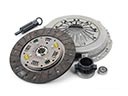 Ford F-350 Super Duty Clutch Disc
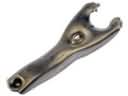 Ford F-350 Super Duty Clutch Fork
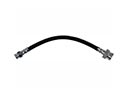 Ford F-350 Super Duty Clutch Hose
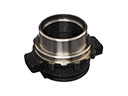 Ford F-350 Super Duty Clutch Release Bearing
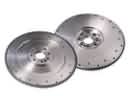 Ford F-350 Super Duty Flywheel
 Ford F-350 Super Duty Pilot Bearing
 Ford F-350 Super Duty Torque Converter
 Ford F-350 Super Duty Transfer Case Seal
 Ford F-350 Super Duty Transmission Drain Plug
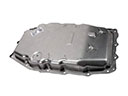 Ford F-350 Super Duty Transmission Pan