FordParts
My Garage
My Account
Cart
OEM Ford F-150 Output Shaft Seal
Output Seal- Select Vehicle by Model
- Select Vehicle by VIN
Select Vehicle by Model
orMake
Model
Year
Select Vehicle by VIN
For the most accurate results, select vehicle by your VIN (Vehicle Identification Number).
6 Output Shaft Seals found
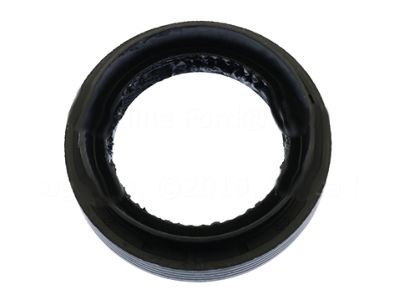
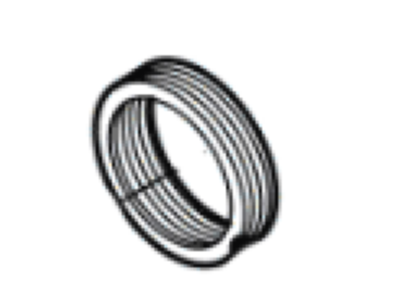
Ford F-150 Output Shaft Seal Part Number: FL3Z-7B215-C
$21.18 MSRP: $30.83You Save: $9.65 (32%)Ships in 1-3 Business Days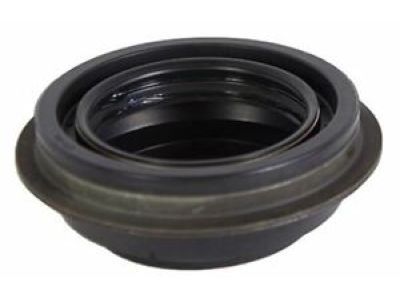
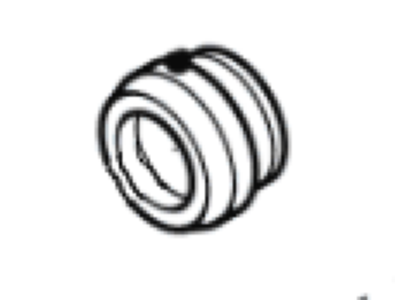
Ford F-150 Output Shaft Seal Part Number: FL3Z-7B215-B
$28.20 MSRP: $40.00You Save: $11.80 (30%)Ships in 1-2 Business Days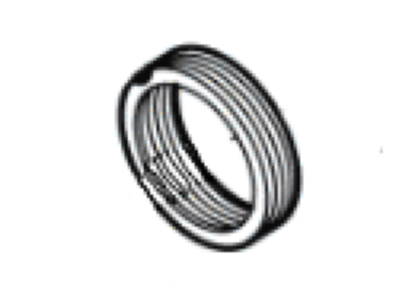
Ford F-150 Output Shaft Seal Part Number: M1MZ-7B215-A
$11.75 MSRP: $16.67You Save: $4.92 (30%)Ships in 1-2 Business Days
Ford F-150 Output Shaft Seal Part Number: ML3Z-7B215-B
$8.05 MSRP: $11.42You Save: $3.37 (30%)Ships in 1-2 Business Days
Ford F-150 Output Shaft Seal Part Number: ML3Z-7B215-A
$21.74 MSRP: $30.83You Save: $9.09 (30%)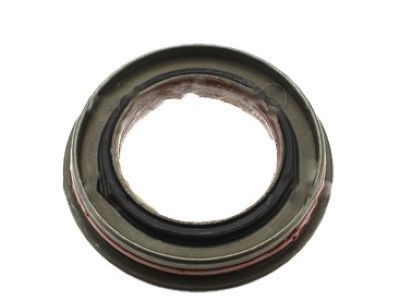
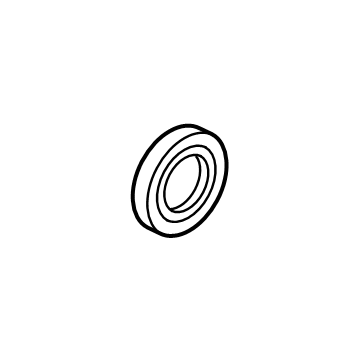
Ford F-150 Axle Seal, Front Inner Part Number: AL3Z-4B416-A
$24.79 MSRP: $35.17You Save: $10.38 (30%)
Ford F-150 Output Shaft Seal
OEM Output Shaft Seal boasts unmatched quality. Each part goes through full quality checks. They adhere to Ford's official factory standards. These steps remove flaws and inconsistencies. So you can get Output Shaft Seal with long life and a perfect fit. Come to our website and find genuine Ford F-150 parts. We keep a wide inventory of OEM F-150 parts at the highly affordable prices. It's easy to search, compare, and pick what you need. You'll love the clear info and simple checkout. We offer top-rated customer service, and we reply fast. We also ship promptly to ensure your order arrives on time.
Ford F-150 Output Shaft Seal Parts and Q&A
- Q:How to service the output shaft seal for RWD and 4WD on Ford F-150?A:When servicing the output shaft seal, the vehicle is typically placed in NEUTRAL and positioned on a hoist so the driveline can be accessed; depending on whether the application is rear-wheel drive or four-wheel drive, different components are first removed. On rear-wheel-drive vehicles the rear driveshaft is removed and the output shaft flange nut is un-staked and discarded, care being taken to avoid damage to the output shaft, then the extension housing flange seal and output shaft flange are taken off and the output shaft seal is extracted using an input-shaft oil seal remover and slide hammer, with the slip-plane washer removed as well. In some cases, four-wheel-drive units are serviced by removing the transfer case first, and the output seal is pulled in the same way with the seal-removal tools. Reassembly is similarly dependent on configuration: for RWD applications the slip-plane washer is reinstalled, a new output seal is positioned and seated with the 6R80 Rear Seal 4X2 installer, the output flange and extension housing seal are refitted, and a new flange nut is torqued to about 80 Nm (59 lb-ft) and staked at the slots to prevent loosening before the driveshaft is reassembled; for 4WD units the output seal is positioned and installed with the 6R80 Rear Seal 4X4 installer and the transfer case is reinstalled. Finally, transmission fluid is replenished and checked to complete the service.
Related Ford F-150 Parts
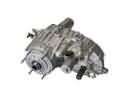 Ford F-150 Transfer Case
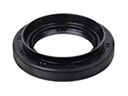 Ford F-150 Automatic Transmission Output Shaft Seal
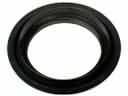 Ford F-150 Automatic Transmission Seal
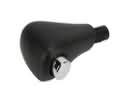 Ford F-150 Automatic Transmission Shift Levers
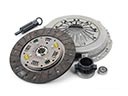 Ford F-150 Clutch Disc
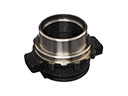 Ford F-150 Clutch Release Bearing
 Ford F-150 Pilot Bearing
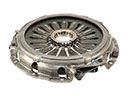 Ford F-150 Pressure Plate
 Ford F-150 Shift Cable
 Ford F-150 Transfer Case Seal
 Ford F-150 Transmission Pan
 Ford F-150 Valve Body