FordParts
My Garage
My Account
Cart
OEM Ford Windstar Power Steering Hose
Power Steering Pressure Hose- Select Vehicle by Model
- Select Vehicle by VIN
Select Vehicle by Model
orMake
Model
Year
Select Vehicle by VIN
For the most accurate results, select vehicle by your VIN (Vehicle Identification Number).
13 Power Steering Hoses found
Ford Windstar Power Steering Pressure Hose Part Number: F58Z3A719C
$14.15 MSRP: $19.57You Save: $5.42 (28%)Ships in 1-2 Business Days
Ford Windstar Upper Return Hose Part Number: XF2Z-3A713-AA
$37.91 MSRP: $52.44You Save: $14.53 (28%)Ships in 1-2 Business DaysFord Windstar Lower Return Hose Part Number: XF2Z-3A713-AB
$57.71 MSRP: $79.83You Save: $22.12 (28%)Ships in 1-2 Business DaysFord Windstar Power Steering Pressure Hose Part Number: 2F2Z-3A719-AA
$96.07 MSRP: $132.91You Save: $36.84 (28%)Ships in 1-2 Business Days
Ford Windstar Power Steering Return Hose Part Number: 3F2Z-3A713-AA
$92.77 MSRP: $128.34You Save: $35.57 (28%)Ships in 1-2 Business DaysFord Windstar Power Steering Return Hose Part Number: F88Z-3A713-CA
$124.72 MSRP: $169.72You Save: $45.00 (27%)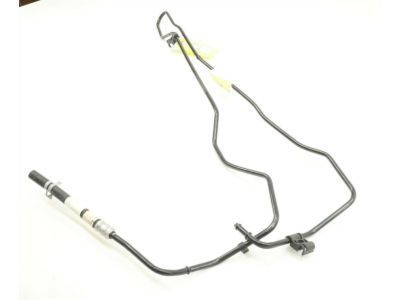
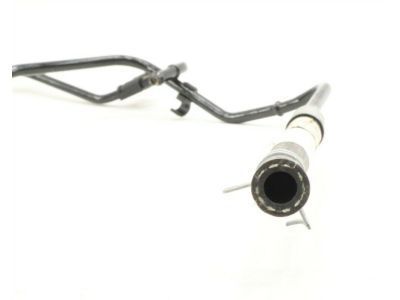
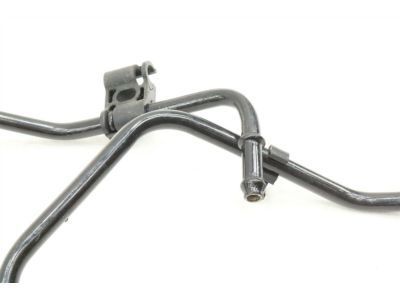
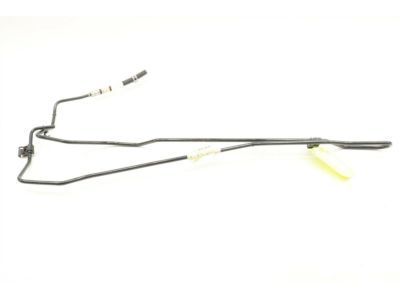
Ford Windstar Power Steering Cooler Tube Part Number: F78Z-3A713-JA
Ford Windstar Power Steering Pressure Hose Part Number: XF2Z-3A719-BA
Ford Windstar Power Steering Pressure Hose Part Number: F78Z-3A719-JA
Ford Windstar Power Steering Pressure Hose Part Number: F78Z-3A719-HA
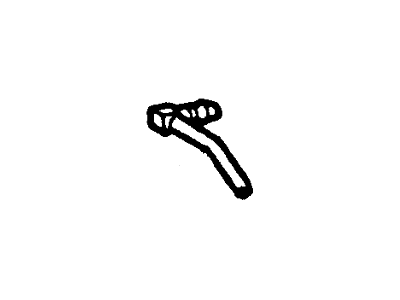
Ford Windstar Pressure Line Part Number: F3DZ-3A717-A
Ford Windstar Pressure Line Part Number: F3DZ-3A714-A
Ford Windstar Suction Hose Part Number: 2F2Z-3A719-BA
Ford Windstar Power Steering Hose
OEM Power Steering Hose boasts unmatched quality. Each part goes through full quality checks. They adhere to Ford's official factory standards. These steps remove flaws and inconsistencies. So you can get Power Steering Hose with long life and a perfect fit. Come to our website and find genuine Ford Windstar parts. We keep a wide inventory of OEM Windstar parts at the highly affordable prices. It's easy to search, compare, and pick what you need. You'll love the clear info and simple checkout. We offer top-rated customer service, and we reply fast. We also ship promptly to ensure your order arrives on time.
The Ford Windstar Power Steering Hose provides pressurized hydraulic fluid to ensure that steering becomes easy for drivers. Large families are also pleased with the Ford Windstar due to its long 120.7-inch wheelbase, which keeps the ride comfortable over rough roads, its large 201-inch body that has the capacity for seven adults and luggage, and its well-tuned suspension that does not get upset even in cases where the minivan is fully loaded with its 3,800-pound capacity. A reliable 3.0-liter Vulcan V6 or optional 4.2-liter Essex V6 with a responsive four-speed automatic provides the Ford Windstar with strong yet efficient acceleration, and years of use on safety and confidence are ensured by extensive crash testing and quality original parts. Quiet cabins, comfortable seating, and the availability of certified replacements that can be readily available to owners are also valued by owners who, in turn, make the Ford Windstar a cost-effective option even after stopping production. It was found that the Power Steering Hose is the highly flexible high-pressure line in this network of parts that has to withstand constant heat, vibration, and prevent leakage, which would otherwise result in a heavy wheel or a noisy pump. A new Power Steering Hose will allow the steering to work again correctly and maintain hydraulic fluid flow to cool and filter. To install a new Power Steering Hose, the first thing to do is to secure the van, relieve system pressure, remove the old system hose capping ports, hand start and tighten the new fittings, run the line out of the way of heat, fill the fluid back in, blow out the system, and check to see whether it is leaking.
Related Ford Windstar Parts
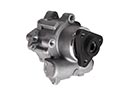 Ford Windstar Power Steering Pump
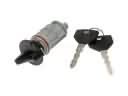 Ford Windstar Ignition Lock Assembly
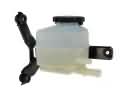 Ford Windstar Power Steering Reservoir
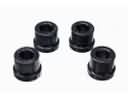 Ford Windstar Rack & Pinion Bushing
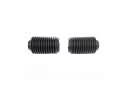 Ford Windstar Rack And Pinion
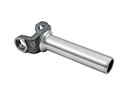 Ford Windstar Slip Yoke
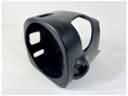 Ford Windstar Steering Column Cover
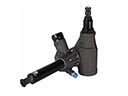 Ford Windstar Steering Gear Box
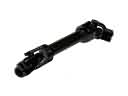 Ford Windstar Steering Shaft
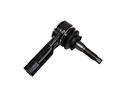 Ford Windstar Tie Rod
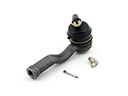 Ford Windstar Tie Rod End
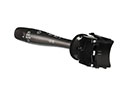 Ford Windstar Turn Signal Switch