FordParts
My Garage
My Account
Cart
OEM Mercury Voltage Regulator
Adjustable Voltage Regulator- Select Vehicle by Model
- Select Vehicle by VIN
Select Vehicle by Model
orMake
Model
Year
Select Vehicle by VIN
For the most accurate results, select vehicle by your VIN (Vehicle Identification Number).
7 Voltage Regulators found
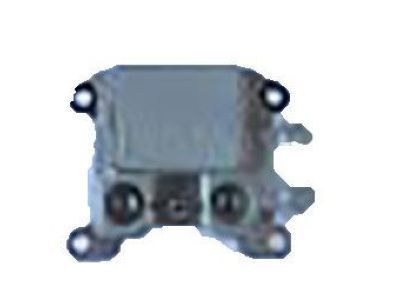
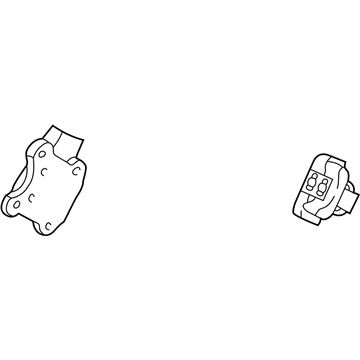
Mercury Voltage Regulator Part Number: F5RZ-10316-B
Product Specifications- Other Name: Regulator Assembly - Voltage; Regulator
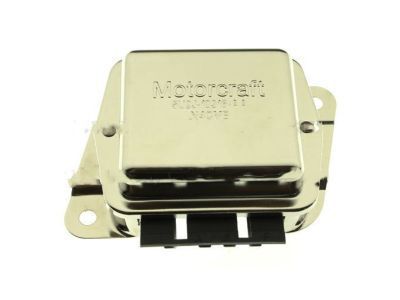
Mercury Voltage Regulator Part Number: FOPZ-10316-A
$50.49 MSRP: $80.18You Save: $29.69 (38%)Product Specifications- Other Name: Regulator Assembly - Voltage; Regulator
- Replaces: FOAZ-10316-A

Mercury Voltage Regulator Part Number: F4ZZ-10C359-AA
Product Specifications- Other Name: Regulator And Brush; Regulator; Regulator And Brush Holder Assembly
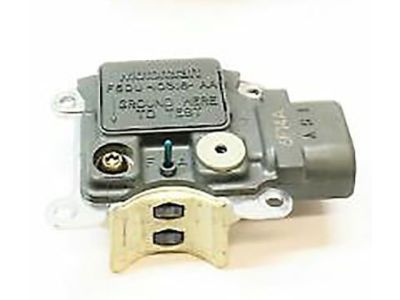
Mercury Voltage Regulator Part Number: F1DZ-10C359-A
Product Specifications- Other Name: Regulator And Brush
- Replaces: FODZ-10316-A

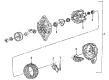
Mercury Voltage Regulator Part Number: E8GZ10316A
Product Specifications- Other Name: Regulator/Relay; Regulator Assembly - Voltage
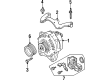
Mercury Voltage Regulator Part Number: F6DY-10316-A
Product Specifications- Other Name: Regulator Assembly - Voltage; Regulator Assembly; Regulator

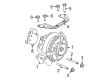
Mercury Voltage Regulator Part Number: F5OY-10316-A
Product Specifications- Other Name: Regulator Assembly - Voltage; Regulator
Mercury Voltage Regulator
If you own Mercury and want to keep it in top shape, choosing OEM Voltage Regulator is a smart move. They are precisely engineered and follow strict factory standards. They are made in advanced facilities that use cutting edge technology. Each part goes through thorough testing to confirm strength and safety, so you can trust it. FordPartsDeal.com gives you genuine Mercury Voltage Regulator at some of the affordable online prices without cutting quality. Every OEM Mercury part includes the manufacturer's warranty, easy returns, and super-fast delivery. So why wait? Shop now and get your vehicle back to peak condition.
Mercury Voltage Regulator provides protection to the electrical system by maintaining the output of the alternator constant to ensure that batteries are charged and electronic equipment is not overloaded. Mercury, which began its life in 1938, was a lineup that was sought after with its soft ride, highly appealing appearance, and spacious cabins, and gave its drivers what was both smoother than a budget car yet not luxury bills and thus a calmer ambiance that lent the line a lively appearance and solid worth that lasted a decade or two while Cougars and Grand Marquis commanded driveways. Even when production came to a stop in 2011, the brand continued to feel the positive vibe of its go-anywhere image and affordable cost of doing business, and all the Mercury showrooms at one time were insinuating that there was an unidentified Voltage Regulator lurking in the shadows, and that long trips would be just as safe with its soft seats and wide glass making the long miles seem like a few miles. Instead of using the old mechanical Voltage Regulator, Mercury drivers are now installing solid-state control that switches thousands of times a second, cutting off heat and waste and turning on full field current once the volts drop and off as soon as the cells are topped off. The new solid units install within the alternator and hence fewer wires rattle loose, and the onboard computer in a Mercury keeps track of system demand and hence instructs the Voltage Regulator to push through only the amount of juice required, i.e., dim lights at idle and volts run away on stretches of highway. Replacement of a large contact point box with an electronic Voltage Regulator also eliminates flicker, eliminates overcharge blues, and enables vintage coupes to ride with modern reliability.
Mercury Voltage Regulator Parts and Q&A
- Q:How to replace the External voltage regulator on Mercury Capri?A:Detach the cable from the negative terminal of the battery. Locate the voltage regulator on the right side of the engine compartment. If necessary, remove the battery or air cleaner duct to gain access to the voltage regulator. Unplug the electrical connector from the voltage regulator. Remove the regulator mounting bolts. Remove the regulator. Installation is the reverse of removal.
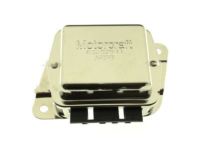
Related Mercury Parts
 Mercury Starter Solenoid
 Mercury Starter
 Mercury Alternator
 Mercury Car Battery
 Mercury Alternator Bracket
 Mercury Alternator Brush
 Mercury Alternator Pulley
 Mercury Armature
 Mercury Battery Cable
 Mercury Battery Tray
 Mercury Starter Brush