FordParts
My Garage
My Account
Cart
OEM Mercury Grand Marquis Fuel Rail
Engine Fuel Rail- Select Vehicle by Model
- Select Vehicle by VIN
Select Vehicle by Model
orMake
Model
Year
Select Vehicle by VIN
For the most accurate results, select vehicle by your VIN (Vehicle Identification Number).
4 Fuel Rails found
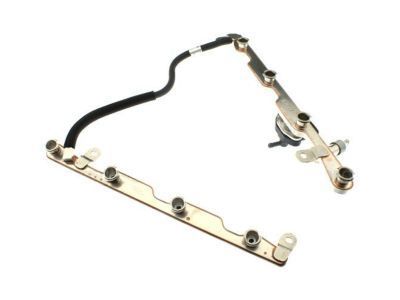
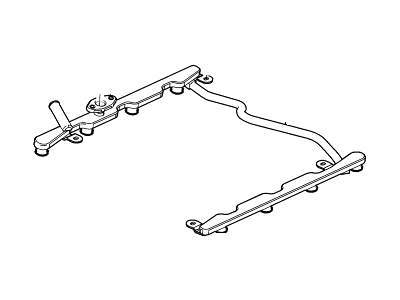
Mercury Grand Marquis Fuel Rail Part Number: 5W7Z-9F792-AC
$312.13 MSRP: $458.33You Save: $146.20 (32%)
Mercury Grand Marquis Fuel Rail Part Number: XW1Z-9F792-AA

Mercury Grand Marquis Fuel Rail Part Number: 3W7Z-9F792-CD
Mercury Grand Marquis Fuel Rail Part Number: 1W7Z-9F792-AA
Mercury Grand Marquis Fuel Rail
OEM Fuel Rail boasts unmatched quality. Each part goes through full quality checks. They adhere to Mercury's official factory standards. These steps remove flaws and inconsistencies. So you can get Fuel Rail with long life and a perfect fit. Come to our website and find genuine Mercury Grand Marquis parts. We keep a wide inventory of OEM Grand Marquis parts at the highly affordable prices. It's easy to search, compare, and pick what you need. You'll love the clear info and simple checkout. We offer top-rated customer service, and we reply fast. We also ship promptly to ensure your order arrives on time.
Mercury Grand Marquis Fuel Rail Parts and Q&A
- Q:How to service and repair the Fuel Rail on Mercury Grand Marquis?A:Safety measures should be observed at all times during supply manifold fuel injection service and repair because fuel-linked components are explosive substances and the fuel system operates under high pressure even when the engine stops. Start servicing the fuel injection supply manifold by disconnecting the battery cable ground while easing fuel pressure and removing fuel lines. Detailed work on the Throttle Body requires its removal together with separate disconnection of the EGR Valve from the exhaust manifold tube in gasoline-powered vehicles. The first step requires belt drive removal followed by the disconnection of fuel temperature and pressure sensor connectors which applies to natural gas engine vehicles. The process then demands removal of main fuel shut-off solenoid connector followed by generator cable then electrical connector with harness pin-type retainer. Detach the generator mounting bracket and bolts while detaching the return spring followed by disconnecting accelerator and speed control cables which should be set aside. Release the Accelerator Cable together with the speed control actuator cable from the crash brackets followed by removing the fuel charging wiring pin-type retainer from the crash bracket. To disassemble the crash bracket the technician should disconnect vacuum lines then electrical connector before removing bolt and stud and finally disconnecting ground connector from rear RH stud with generator harness locator retainer from front LH stud. Disconnect the eight Fuel Injector electrical connectors in addition to the crankcase ventilation tube. The gas engine requires disabling both the evaporative emission canister purge valve vacuum line and its electrical connection and the vacuum line serving the evaporative emission canister purge valve. The four studs must be removed to extract the fuel injection supply manifold with attached fuel injectors as one unit. The installation of O-rings requires specialized fuel-resistant materials which should not contain reused standard O-ring elements to achieve leak-free operation. Clean engine oil should be used to lubricate the fuel injector pockets before installing the fuel injection supply manifold with fuel injectors as one unit by tightening the studs to factory specifications. The replacement sequence consists of mounting the crash bracket together with its bolt and stud. The purge valve of the evaporative emission canister requires a vacuum attachment alongside its electrical wire and vacuum line for gasoline engines. Append the crankcase ventilation tube and connect all eight fuel injector electrical connectors followed by connecting vacuum lines and their electrical connector when using natural gas. Install the fuel charging pin-type retainer to the crash bracket, fasten the accelerator and speed control actuator cables to crash brackets, then reattach the return springs with bolts to both cables. The generator mounting bracket should be reinstalled while tightening its bolts and natural gas engines require connections of the generator cable in addition to the electrical connector and harness pin-type retainer. Please install the main fuel shut-off solenoid connector and also connect the Fuel Pressure Sensor connector and fuel temperature sensor connector. The last step includes connecting the ground connector to its RH rear stud while also attaching the generator harness location retainer to its frontal LH stud followed by Drive Belt installation and EGR valve reattachment to the exhaust manifold tube for gasoline engines and throttle body attachment and reconnection to the fuel lines before installing the battery ground cable.
Related Mercury Grand Marquis Parts
 Mercury Grand Marquis Air Duct
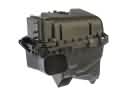 Mercury Grand Marquis Air Filter Box
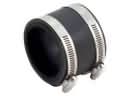 Mercury Grand Marquis Air Intake Coupling
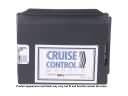 Mercury Grand Marquis Cruise Control Module
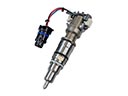 Mercury Grand Marquis Fuel Injector
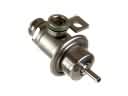 Mercury Grand Marquis Fuel Pressure Regulator
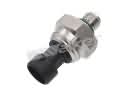 Mercury Grand Marquis Fuel Pressure Sensor
 Mercury Grand Marquis Fuel Tank Vent Valve
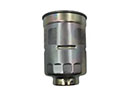 Mercury Grand Marquis Fuel Water Separator Filter
 Mercury Grand Marquis Gas Cap
 Mercury Grand Marquis Idle Control Valve
 Mercury Grand Marquis Mass Air Flow Sensor